


Runner Coaster
4.3190.00 Reviews
App Specs
- Version
- 2.5.6
- Updated On
- License
- Free
- Downloads
- 10,000,000+
- Developer
- Dual Cat
- Categories
- Arcade
- Platform
- Android
Screenshots
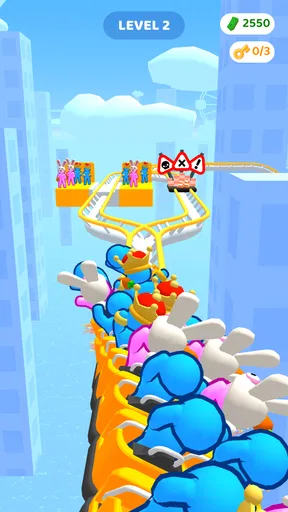
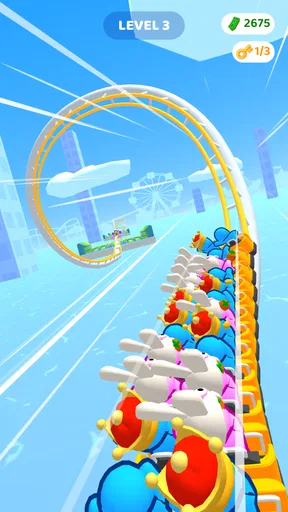
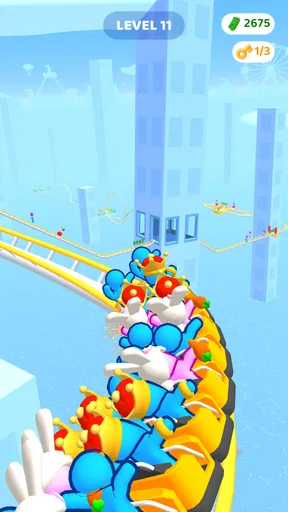
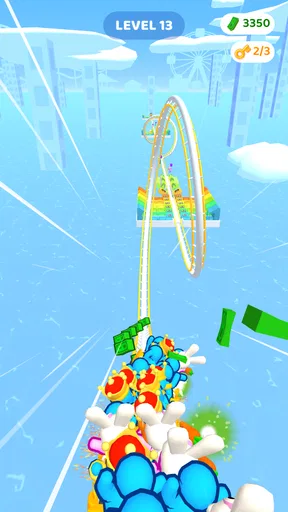
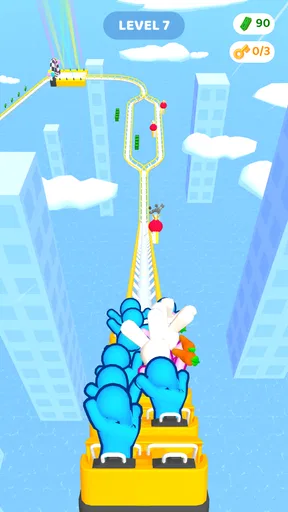
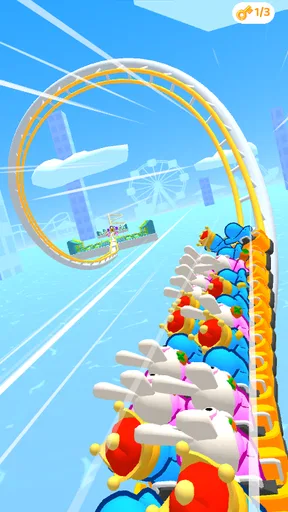
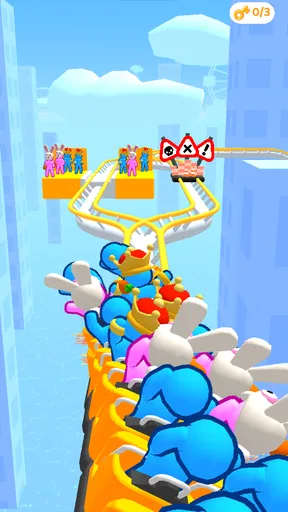
 Analysis by AppCompare
I found Runner Coaster most enjoyable when I treated it as a quick arcade challenge rather than a game I needed to master in one sitting. Its central idea is easy to understand: guide a roller-coaster run through a series of situations and try to reach the end successfully. That simplicity makes it approachable, but the timing pressure gives each attempt enough tension to keep me trying after a mistake.
Developed by Dual Cat, this free game sits in the arcade category and is aimed at players who want short sessions with an immediate objective. It is available for devices running Android 7.0 or later, carries a Teen content rating, and its current version is 2.5.6. The game has already passed 10 million installs, with a 4.3 average from around 37 thousand ratings, so it is clearly familiar to a large mobile audience.
What to expect when you start playing
The first thing I noticed is how quickly the game gets to its point. There is no need to learn a large collection of characters, manage a complicated inventory, or understand a long story before playing. The attraction is the run itself: observe what is happening, react at the right moment, and see whether the coaster can make it through.
That design works particularly well for short breaks. I can play while waiting for a coffee, during a short commute when I am seated, or between other tasks without needing to remember a complicated plan from the previous session. The game’s arcade structure also makes failure easy to understand. When a run ends badly, I generally know that my timing or attention was not good enough, which makes another attempt feel worthwhile.
At the same time, this is not the best choice if you want a deep simulation of roller-coaster design. The appeal is not building a track, adjusting engineering details, or creating a long-term park. It is about surviving the presented challenge. Players who prefer management games, large maps, or extensive customization may find the experience too focused.
The free entry point is convenient for trying it without commitment. There are in-app purchases priced at $2.49 per item, so I would approach those as optional spending rather than part of the basic reason to install the game. The important question is whether the core attempts are entertaining enough for you before considering anything extra.
The best way to approach the first few minutes
I recommend beginning with the sound on if you are somewhere suitable, keeping the phone steady, and giving the first attempt your full attention. Even in a simple arcade game, looking away at the wrong moment can make a run feel harder than it really is. I found that the first meaningful success came more from watching the action carefully than from tapping quickly.
Worth Reading Before You Choose

EA SPORTS FC Mobile 26 Is a Bigger Football Game, but It Takes Time

Flipboard Shows What News Apps Must Do Beyond the Feed

Switching to Android Auto Means Rethinking Your Driving Routine

Google Calendar Makes a Crowded Week Easier to Manage

Ludo King Makes the Most of the Minutes Between Plans

Baby Panda World Brings Quick Play to Modern Phones, but Its Game Library Feels Busy
Do not judge the game by the first failed attempt. The opening run is useful because it teaches the rhythm of the level and shows which moments deserve concentration. Instead of immediately repeating the same input, I try to identify the exact point where the run went wrong. Was I too early, too late, or distracted by what happened immediately before? That small habit turns failure into information.
A useful rule is to separate observation from reaction. Watch the movement first, then act when the situation becomes clear. Players who respond to every visual change may waste their attention and make hurried decisions. The game becomes calmer once I stop treating every moment as an emergency.
Getting from installation to the first real success
After installing the game, I would set aside a few uninterrupted minutes rather than opening it while doing something else. The controls and objective are simple enough to approach immediately, but the first successful run depends on noticing the game’s timing. A quiet first session helps you learn that timing without blaming the controls for mistakes caused by distraction.
My suggested routine is straightforward. Start one run, focus on the complete sequence, and accept the first failure without changing everything at once. On the second attempt, concentrate on the first point that caused trouble. If that improves, keep the same approach for the next difficult moment. This is more effective than tapping randomly or changing your strategy after every small error.
The first success is less about speed than about recognizing a repeatable rhythm. Once I understood when to hold my attention and when to wait, the game felt more predictable. That does not remove the challenge, but it makes progress feel earned rather than lucky.
For a first-time player, this also answers an important practical question: do you need prior experience with arcade games? Not really. Familiarity with timing-based mobile games may help, but the basic loop is accessible. The learning curve comes from reading the situation and improving your response, not from memorizing a large rulebook.
Why repeated attempts remain useful
Runner Coaster benefits from the short-attempt format because each restart gives me a clear chance to test one adjustment. If I failed by reacting too soon, I can deliberately wait longer on the next attempt. If I lost focus after a successful section, I can treat that transition as the next target. This makes the game a good fit for players who enjoy small, visible improvements.
There is also a psychological advantage to the compact format. A failed run does not feel like losing a long investment of time. I can put the phone down after one attempt or continue for several more, depending on my mood. That flexibility is one of the strongest reasons to choose this over a larger arcade title that expects a longer session.
However, the same structure can become repetitive if the basic challenge does not appeal to you. The game asks you to refine reactions, not to explore a constantly expanding set of systems. I would skip it if you already know that repeating a similar action until your timing improves feels like work rather than play.
Common confusion during a run
The most common mistake is assuming that faster input is automatically better. In my experience, hurried reactions create more problems than slow observation. When the action looks busy, I remind myself that the goal is not to perform as many inputs as possible. The goal is to make the correct response at the useful moment.
Another source of confusion is judging a failed attempt only by its final second. The visible ending is not always where the mistake began. A rushed decision earlier in the sequence can leave the run in a poor position later. When I replay, I look back to the first moment where my attention or timing changed. That gives me a more practical correction than simply trying to react faster at the end.
Some players may also wonder whether a difficult attempt means they are missing a hidden setup step. I did not find that the game required a long preparation process before playing. The more helpful approach is to treat each run as a compact lesson. Watch what happens, identify one error, and retry with one deliberate change.
It is also worth remembering that a phone screen can make timing games feel different from one device to another. If your fingers cover part of the action, try holding the phone in a way that leaves the important area visible. I avoid playing with a loose grip because accidental touches and shifting posture can make a fair challenge feel inconsistent.
Small techniques that improve consistency
One technique that helped me was using a “one mistake” review after every failed run. Instead of listing everything that went wrong, I choose the earliest clear error and focus only on that during the next attempt. This prevents overcorrection and keeps the game from turning into a frantic series of guesses.
A second technique is to pause mentally after a successful section. The game may encourage immediate attention to the next event, but I found that carrying the excitement of a good moment into the next decision can lead to careless timing. Treating each section as a fresh problem keeps my reactions steadier.
A third useful habit is knowing when to stop. If I have failed several times because my attention is fading, continuing immediately rarely helps. A short break can be more valuable than another impatient attempt. This is especially relevant because the game is easy to open for “just one more try,” even when I am no longer concentrating properly.
These techniques are not complicated features hidden behind a menu; they are ways of using the game’s compact design more intelligently. They make the challenge feel less random and help distinguish a genuine timing problem from simple tiredness or distraction.
How it fits into everyday play
Imagine waiting outside an appointment with only a few minutes available. A large role-playing game would be awkward because you might need to remember a quest, manage several screens, or stop in the middle of an important sequence. Runner Coaster is better suited to that moment because one attempt can stand alone. You can focus, play, and close the game without preparing a long session.
It can also work as a light reset between demanding tasks. I sometimes prefer a game with one obvious goal when I do not want another complicated decision-making activity. The coaster theme gives the arcade challenge a recognizable identity, while the short format keeps it from taking over the rest of the day.
That convenience has a limit. Because success depends on attention, it is not ideal while walking, crossing a street, or doing anything that requires awareness of your surroundings. It is also not a good companion for multitasking. The game may be quick, but the moments that matter still deserve your eyes and your hands.
Where it stands beside other arcade choices
Compared with endless runners, this game feels more focused on solving the immediate sequence than on maintaining a long-distance score. Endless runners often reward continuous movement and the gradual accumulation of distance. Here, I get more satisfaction from understanding a specific challenge and improving my response to it.
Compared with puzzle arcades, the emphasis is less on planning several moves ahead. I am not spending most of my time arranging pieces or calculating a chain. The important skill is real-time judgment. That makes it a stronger alternative for someone who wants quick reactions, but a weaker one for a player who prefers quiet, deliberate problem-solving.
It also differs from roller-coaster construction games. Those titles appeal to creativity, design, and management, while this one puts me in the position of handling the run itself. If your idea of a coaster game is drawing tracks and decorating a park, you should choose a different type of experience. If you want a compact arcade test built around getting through the ride, this is the more suitable direction.
In practical terms, I would choose Runner Coaster over a larger arcade game when I want low commitment and a clear retry loop. I would choose a more expansive alternative when I want progression systems, customization, or a reason to return beyond improving timing.
Who should try it, and who should pass
I think it is a good match for players who enjoy quick challenges, immediate feedback, and the satisfaction of correcting one small mistake at a time. It is also friendly to people who do not want to learn a complicated control scheme before reaching the fun. The free price makes experimentation easy, while the Teen rating gives parents and younger players a reason to check whether the content suits their household before installing.
Players who dislike repetition should be more cautious. The central pleasure comes from trying again with better timing, so the game will not transform into a different genre after a few attempts. It may also disappoint anyone looking for a detailed ride simulator, a creative construction tool, or a social experience built around long sessions.
I would be especially selective about optional purchases. Since individual in-app purchases cost $2.49, I would first decide whether the basic arcade loop holds my attention without spending. For me, the game earns its place as a free short-session title before any extra purchase enters the conversation.
What to do after the first successful run
Once you complete a run, the best next step is not automatically to play as quickly as possible. Try to reproduce the success while staying aware of which decision mattered most. If you can explain why the attempt worked, you are building a reliable skill. If it felt accidental, another careful run will tell you whether the result was repeatable.
I also recommend changing only one habit at a time. Do not suddenly tap earlier, hold the phone differently, and rush through every section together. Small adjustments reveal what actually improves your performance. This approach is particularly helpful when a later challenge feels harder, because you will have a clear understanding of your own timing rather than a collection of random reactions.
The current version, 2.5.6, is the version I would look for when installing, especially if the store offers several entries or an older device has retained previous app information. Devices need Android 7.0 or later, so checking that basic requirement before downloading avoids an unnecessary attempt on an incompatible phone.
My recommendation after spending time with it
Runner Coaster works because it keeps its promise narrow. It does not need a complicated explanation to become playable, and it gives each attempt a clear purpose. I like that a short session can still feel meaningful when I identify a timing mistake and correct it on the next try.
Its limitations are just as clear. The experience may feel repetitive for anyone who needs constant novelty, and it cannot replace a construction simulator or a deeper arcade game with extensive progression. The Teen content rating and optional purchases are also details worth considering before handing the game to a younger player or allowing spending on the device.
Overall, I would recommend it to a friend who wants a free arcade game for focused bursts rather than a huge mobile world. Start with a few attentive attempts, learn from the first failure, and avoid confusing speed with accuracy. If that simple improvement loop sounds satisfying, Runner Coaster is easy to try and pleasantly direct. If you need strategy layers, customization, or long-term variety, your time will be better spent elsewhere.
Pros
- Fast-paced coaster running keeps short sessions exciting.
- Simple controls make it easy for new players to start.
- Bright visuals and lively tracks create an entertaining atmosphere.
- Obstacle timing provides a satisfying challenge as skills improve.
- Suitable for quick offline play when you have limited time.
Cons
- Gameplay may feel repetitive after extended sessions.
- Difficulty can increase abruptly on later tracks.
- Frequent obstacles may feel frustrating for younger players.
- Progression may offer limited variety beyond completing tracks.
- Ads or optional purchases can interrupt the overall experience.
FAQs for Runner Coaster
What is Runner Coaster and how does the gameplay work?
Runner Coaster is an endless running game that combines fast lane-changing with roller-coaster-style tracks. You guide a moving character or coaster through colorful routes, collect useful items, avoid obstacles, and try to travel as far as possible. The controls are generally simple, making it easy to start, while increasing speed and changing track layouts provide a progressively more challenging experience.
Is Runner Coaster free to download and play?
Runner Coaster can generally be downloaded and played without an upfront purchase, although the exact availability may depend on whether you use Android or iOS. Like many free mobile games, it may include optional advertisements, rewarded videos, or in-app purchases for bonuses, cosmetic items, extra attempts, or other conveniences. Check the store listing and purchase settings before downloading, especially if children use the device.
Does Runner Coaster require an internet connection?
The core running gameplay may work without a constant internet connection, which is useful when you are traveling or have limited mobile data. However, certain features can require online access, including advertisements, rewards, cloud-related services, updates, rankings, or promotional content. Because requirements can change after updates, it is best to launch the game once while connected and test which features remain available offline.
Is Runner Coaster suitable for children and casual players?
Runner Coaster is designed around straightforward controls and short gameplay sessions, so casual players can usually understand it quickly. Its colorful presentation and simple objective may appeal to younger users, but parents should still review the age rating, advertising, privacy information, and available in-app purchases. Fast reactions are important, and repeated attempts can encourage extended play, so parental controls may be helpful.
What should I check before installing Runner Coaster?
Before installing Runner Coaster, verify that your phone or tablet meets the operating-system and storage requirements shown on the official Google Play or App Store page. Also review the developer name, recent user ratings, update history, permissions, privacy policy, and whether the game contains ads or purchases. Downloading from official stores is the safest option and reduces the risk of modified or unsafe copies.


